5 Reasons to Train with Kettlebells
Author: Kettlebells Australia Date Posted:16 September 2026
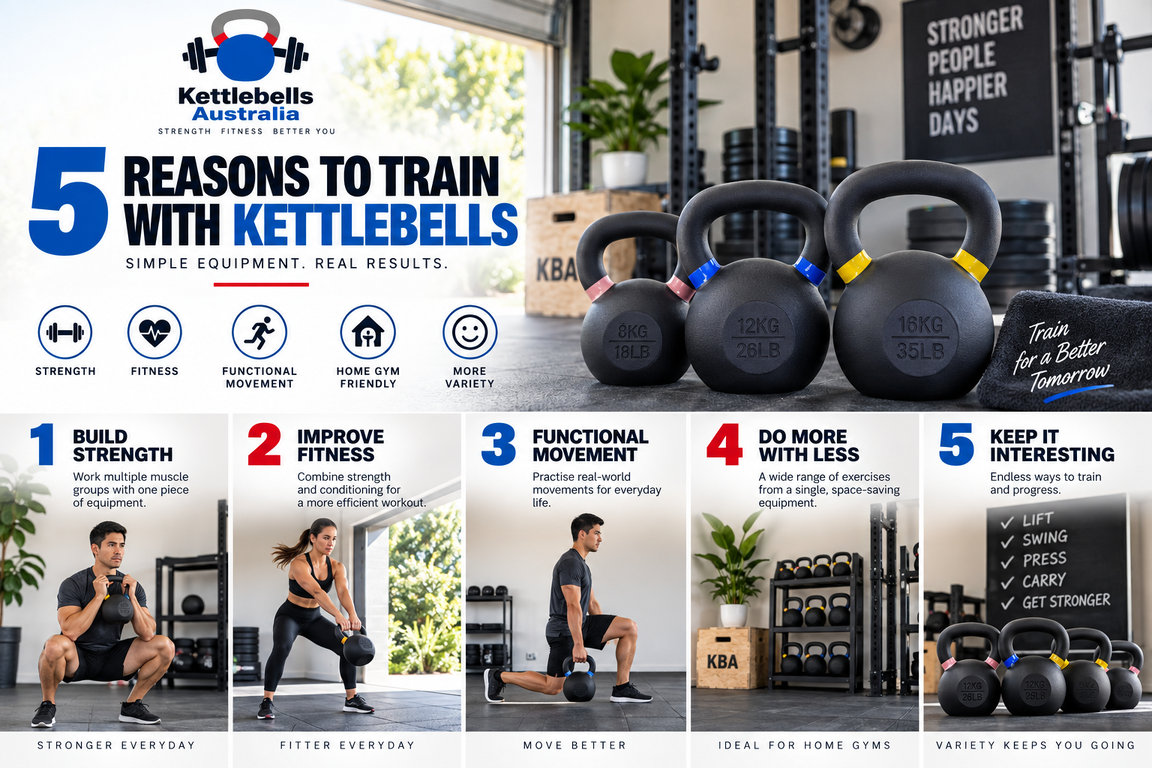

Simple, versatile and suitable for much more than just kettlebell swings. Here are five reasons kettlebells can be a useful addition to your training.
There aren't many pieces of gym equipment as simple as a kettlebell.
It's essentially a weight with a handle, yet that simple design allows it to be used in remarkably different ways. You can lift it, carry it, press it, squat with it or use it for more dynamic exercises such as swings.
That versatility is one reason kettlebells work particularly well in a home gym, where you may not have the room—or need—for a large collection of equipment.
Here are five reasons you might consider including kettlebells in your training.
1. Train strength in different ways
Strength training doesn't have to mean using a barbell or sitting at a weight machine.
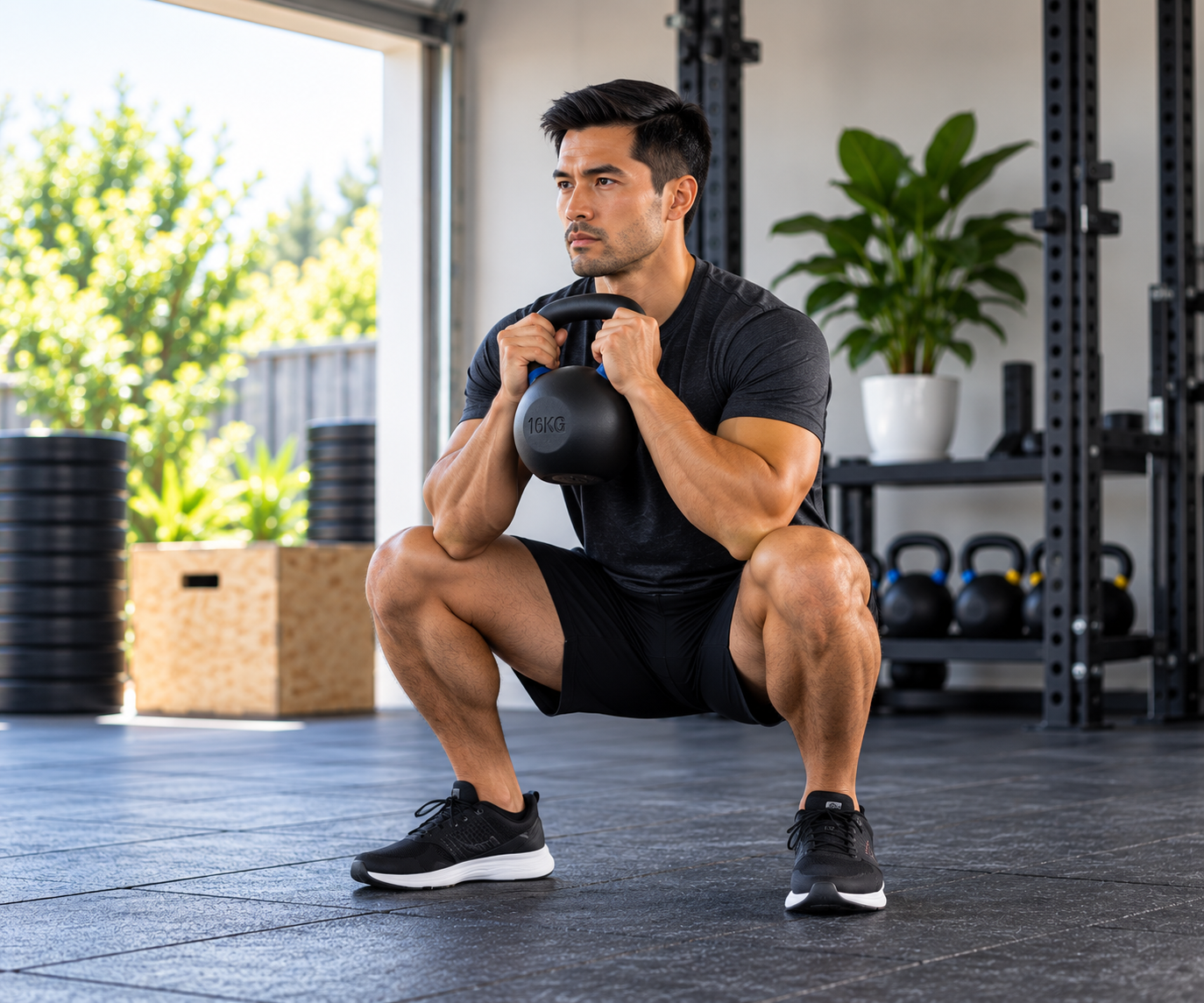
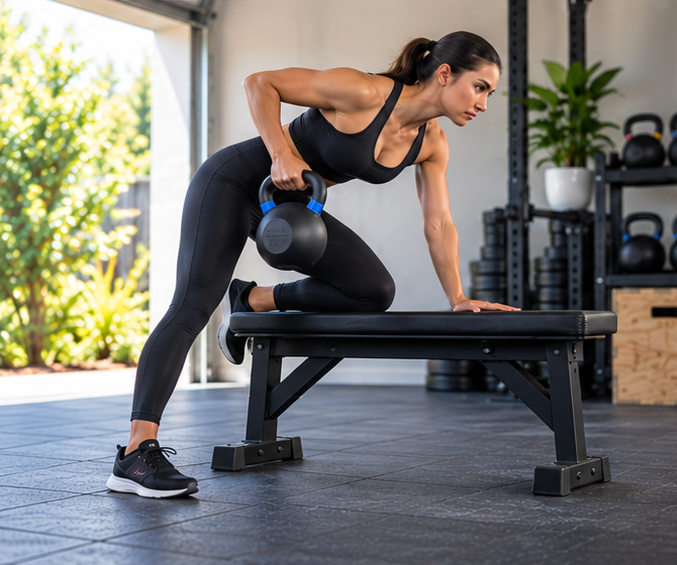
Kettlebells can provide resistance for familiar movements such as squats, deadlifts, rows and overhead presses. They can also be used for loaded carries and exercises where the weight is held on one side of the body.
This gives you plenty of ways to challenge different muscle groups using the same piece of equipment.
For example, you might use a kettlebell for goblet squats before moving on to rows, presses and carries—all without changing to another type of equipment.
Strength training itself is an important part of an active lifestyle. Australia's current movement guidelines recommend that adults undertake muscle-strengthening activities on at least two days each week.
2. Add conditioning to your workouts
Kettlebells aren't limited to slower strength exercises.
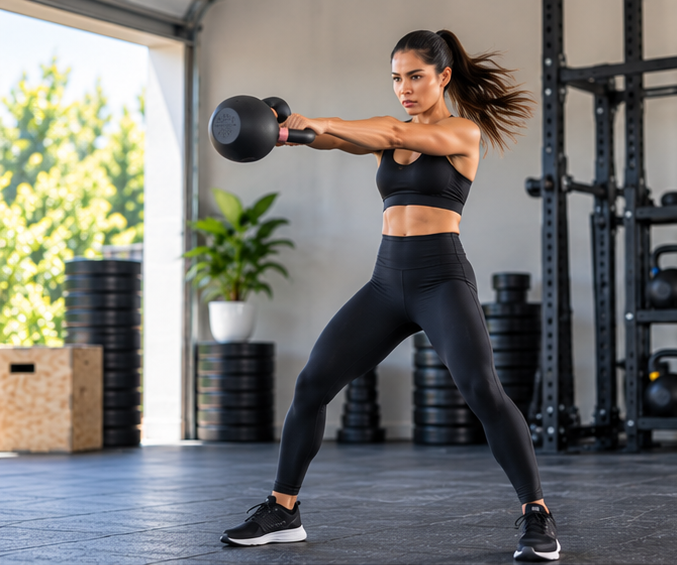
Exercises such as swings involve continuous movement and can be incorporated into higher-intensity training sessions. This means the same equipment you use for strength work can also play a role in conditioning.
A workout could, for example, alternate kettlebell exercises with rest periods or other exercises to create a more demanding session.
Some studies have reported improvements in aerobic fitness following particular kettlebell training programs, although results depend on the program and the people being studied. One recent small study involving recreationally active women found improvements in both strength and aerobic capacity following a 10-week program. An earlier study involving collegiate female soccer players also found improved aerobic capacity following a specific high-intensity kettlebell protocol.
The important point isn't that every kettlebell workout automatically becomes cardio. It's that kettlebells give you the flexibility to incorporate both resistance exercises and more energetic movements into your training.
3. Practise useful movement patterns
Think about movements outside the gym and you'll notice that everyday life doesn't always happen in perfectly controlled, isolated movements.
We bend. We squat. We pick things up. We carry things from one place to another.
Many kettlebell exercises use similarly broad movement patterns.
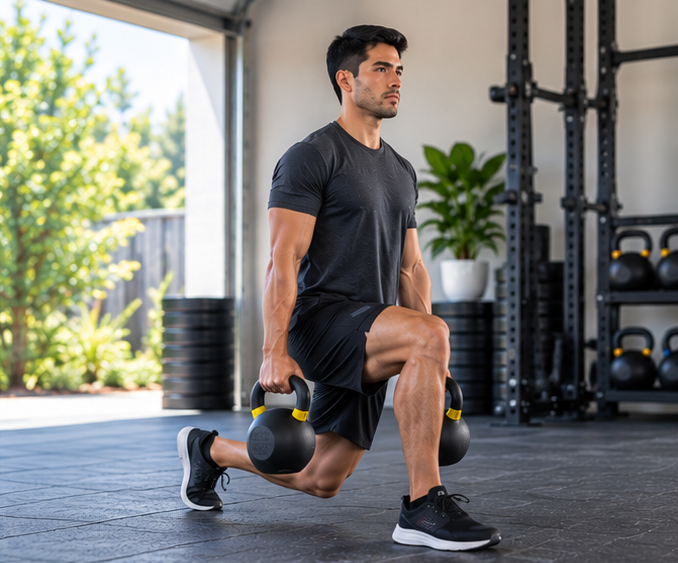
A deadlift involves picking a weight up from the floor. A loaded carry involves moving while supporting additional weight. A goblet squat combines lower-body movement with holding a load in front of you.
That doesn't make kettlebells magical, but it does make them a practical way to incorporate a variety of movements into a strength program.
Australia's updated adult movement guidelines now separately recommend functional activities targeting mobility, balance and coordination on three or more days each week, alongside aerobic and muscle-strengthening activity.
4. Do more with less equipment
This is perhaps the most straightforward advantage of kettlebells.
They don't take up much room.
For someone training at home, space can quickly become an issue. Benches, racks, barbells, plates and machines all have their place, but not everyone has a dedicated gym room or large garage.
A few kettlebells can occupy relatively little floor space while providing a surprisingly broad selection of exercise options.
You can build a simple session around exercises such as:
- Goblet squats
- Deadlifts
- Rows
- Overhead presses
- Lunges
- Carries
- Swings
You don't have to use all of them. The point is that one type of equipment doesn't necessarily limit you to one type of exercise.
That's particularly useful if you're starting a home gym gradually rather than buying everything at once.
5. Keep your training varied
Doing the same routine over and over can become repetitive.
Kettlebells make it relatively easy to change the emphasis of a workout.
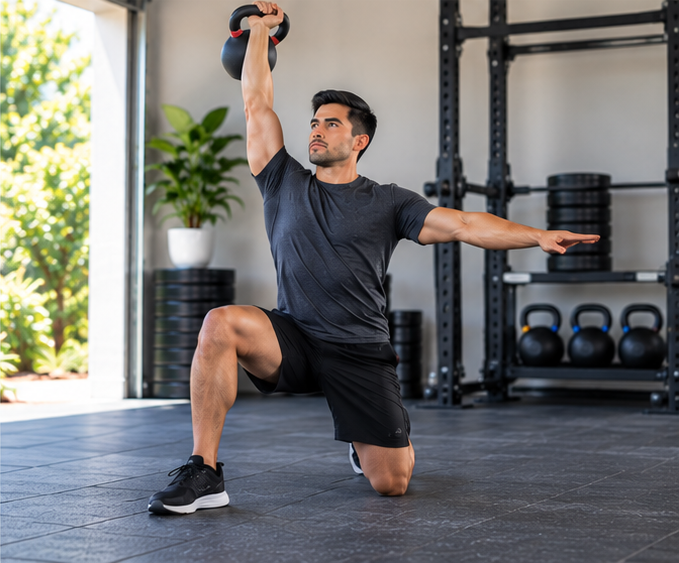
One session might concentrate on strength with squats, presses and rows. Another might be shorter and faster-paced. You could also use kettlebells alongside dumbbells, resistance bands, a bench, battle ropes or your existing gym equipment.
As your ability develops, progression doesn't necessarily mean immediately buying more equipment either. Depending on the exercise, you may be able to adjust repetitions, sets, tempo, rest periods or exercise selection before progressing to a different weight.
That flexibility can help keep training interesting.
What if you've never used a kettlebell before?
Start simple.
There's no benefit in choosing a heavy kettlebell if it prevents you from performing the movement properly.
Exercises such as goblet squats, basic deadlifts and carries can provide a more straightforward introduction to handling a kettlebell before progressing to faster or more technical movements.
Kettlebell swings in particular require an understanding of the hip-hinge movement and shouldn't simply be treated as squats performed while swinging a weight.
If you're unsure about technique, getting guidance from an appropriately qualified trainer can be worthwhile—particularly before attempting heavier or more complex exercises.
The takeaway
Kettlebells aren't a replacement for every other piece of gym equipment, and they don't need to be.
Their strength is versatility.
You can use them for traditional resistance exercises, dynamic movements, loaded carries and conditioning while taking up relatively little space.
For someone putting together a home gym, adding variety to an existing training program or simply looking for equipment that can be used in different ways, that's a compelling combination.
Train for a Better Tomorrow.
Want to stay in the loop?
Discover gym essential kettlebells and fitness equipment. Elevate your workout experience with our durable, versatile range, designed for you to achieve peak performance. We'll keep you updated with the latest deals, so that you'll never miss out!
Secure Shopping

Get Connected
Shop Now. Pay Later.
Always interest-free.

Add your favourites to cart

Select Afterpay at checkout

Log into or create your Afterpay account, with instant approval decision
Your purchase will be split into 4 payments, payable every 2 weeks
All you need to apply is to have a debit or credit card, to be over 18 years of age, and to be a resident of country offering Afterpay
Late fees and additional eligibility criteria apply. The first payment may be due at the time of purchase
For complete terms visit afterpay.com/terms